
Ecological corridor is significant for Kommetjie

Kommetjie’s environmental heritage stretches back long before people began building homes here, and protecting it today means recognising the richness of the landscape around us, according to KRRA environmental manager John Cuthill.
Five different vegetation types converge around Kommetjie, while the mountain’s geology provided sandstone caves and shelter. Freshwater came from the permanent river and springs flowing from the mountain, while the cold Benguela Current and coastal upwelling provided fish and shellfish.
Together, these features made the area attractive to the first people who lived here. But John said much of that environmental heritage has since come under pressure, particularly as land ownership and development changed the landscape.
The land was divided up and sold in the 1700s, followed by farming and later the development of housing estates on former vegetable farms. The proclamation of Table Mountain National Park brought greater protection to the mountain and surrounding areas, but some environmentally rich areas were subsequently lost through land negotiations.
Important ecological corridor
One important development, John said, has been the completion of the ecological corridor linking Kommetjie and Noordhoek, connecting the central and southern sections of Table Mountain National Park.
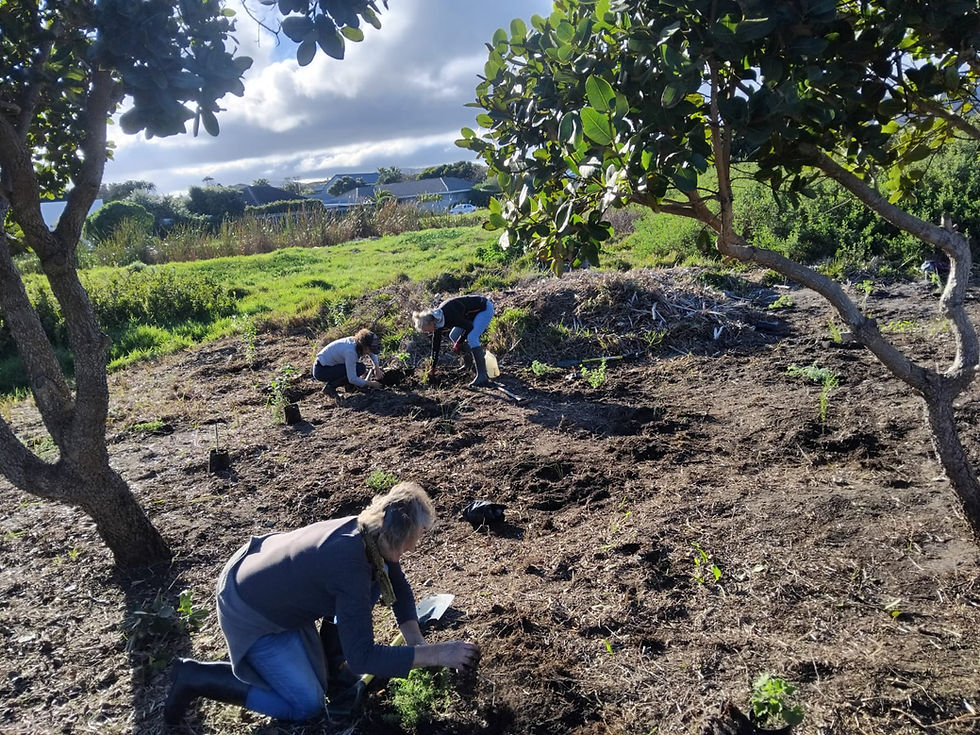
The corridor links the Noordhoek wetlands with Slangkop Mountain and provides an important connection between different natural habitats. Restoration work is under way, including clearing invasive alien vegetation and fire-prone gum trees, to help endangered Hangklip Sand Fynbos and Peninsula Sandstone Fynbos return to the area.
John highlighted the corridor as an important step in protecting Kommetjie’s natural heritage, although ongoing work to control invasive vegetation remains essential.
“What it did was that it defined the limits of Kommetjie,” he said. “Now there can be no more expansion. It's a highly significant area and very important as it basically means Kommetjie is surrounded by a national park.
While development and changes within Kommetjie will continue, John said the defined boundary provides an important opportunity to protect what remains.
Another ongoing threat is invasive alien vegetation
John credited residents and conservation groups with helping to prevent Kommetjie becoming overwhelmed by invasive species, while highlighting the work of Fynforce in the eco corridor.
He stressed that this work needs to continue, particularly on land outside private gardens.
Despite the pressures, Kommetjie retains a remarkable environmental heritage. John pointed to more than 1,000 plant species within three kilometres of the police station and 140 bird species recorded in Kommetjie.
The area’s marine environment is equally important, he said, noting that residents can sometimes see albatrosses offshore after storms. The mountain also supports endemic plants found nowhere else.
Interesting facts
Five vegetation types converge around Kommetjie.
More than 1,000 plant species have been recorded within three kilometres of the Kommetjie police station.
140 bird species have been recorded in Kommetjie.
The area’s Benguela Current and coastal upwelling helped provide an abundant marine food source for early inhabitants.
Sandstone caves in the mountain provided shelter for people living in the area.
The Kommetjie eco corridor took nearly 20 years to negotiate, with the deed going through on 29 July 2026.
The environmental heritage extends from the mountain and its vegetation to the marine environment, including albatrosses that can sometimes be seen offshore after storms.
John highlighted the presence of endemic plants – species that occur only in a particular area – on the mountain.


Comments